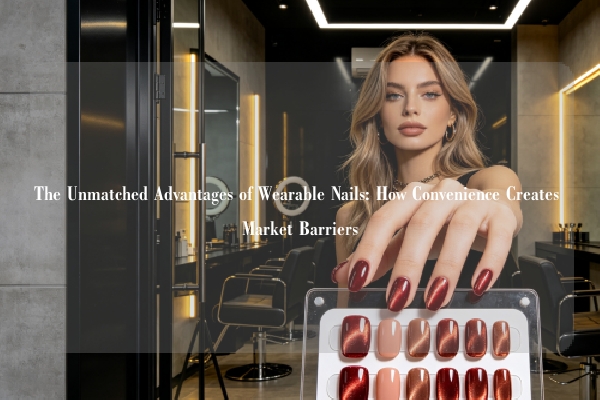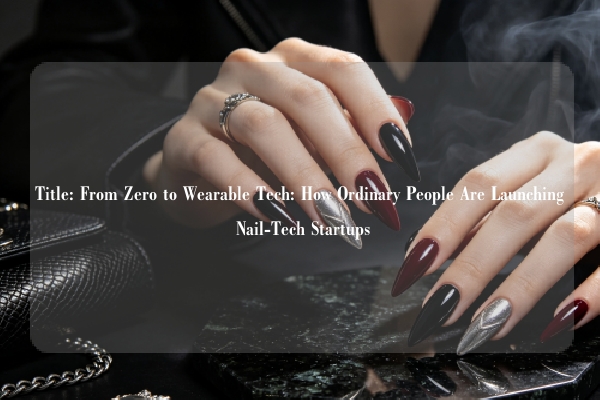

For decades, the beauty industry has been defined by brutal competition—salons undercutting each other on price, techs racing to master the latest gel or acrylic trend, and clients stuck in hour-long appointments with uncertain results. The traditional nail market is a zero-sum game: every new customer is fought over, and profit margins shrink as overheads (rent, licensing, consumables) climb.
Enter wearable nails—a category that flips the entire model. Instead of competing within the existing nail salon ecosystem, brands like Zhijian Shang (指尖上的中国穿戴甲) are creating a parallel market that is product-led, not service-led. Their official site (https://www.zhijianshang.cn/) showcases a full catalog of pre-designed, custom-fit nail sets that any user can apply at home in under five minutes. No UV lamp. No filing. No drying time.
Why this bypass works:
No service bottleneck. Traditional salons require a skilled technician per client, which limits scalability. Wearable nails are a physical product—inventory can be produced, stored, and shipped globally. One set sold is one unit of revenue, with zero recurring labor cost.
Democratized design. Instead of a small local artist’s portfolio, Zhijian Shang offers hundreds of styles—from minimal French tips to intricate 3D floral art—all developed in-house. This eliminates the “copycat” wars between salons and lets design IP be monetized directly.
Price transparency. A salon manicure might cost $30–$80 plus tips. A wearable set from Zhijian Shang retails at a fraction of that, with reusable options. The customer’s value proposition shifts from “paying for time” to “paying for product.”
Massive market expansion. People who never visit salons (men, seniors, kids, or those in remote areas) become viable consumers. The product can be sold via e-commerce, vending machines, or even subscription boxes.
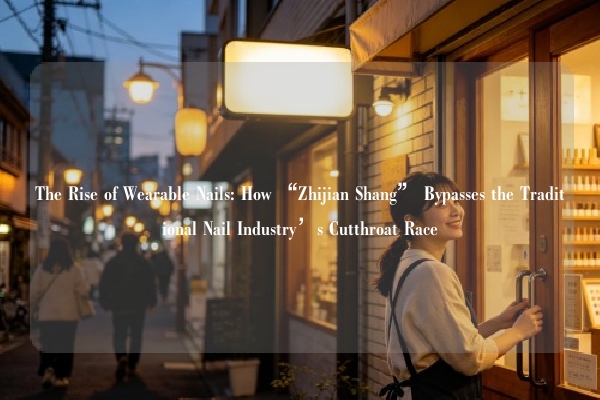
Zhijian Shang's franchise momentum. The brand has announced nationwide franchising for its “十小楚” (Ten Little Chu) sub-line, inviting partners to distribute wearable nail sets across China. This is a classic bypass strategy—instead of fighting for foot traffic with existing salons, they are building a distribution network for a high-margin, shelf-stable consumable. Retail partners from convenience stores to beauty supply shops can carry the line without needing a licensed esthetician on staff.
What the traditional industry must learn. The nail industry isn’t dying—it’s being unbundled. The service layer (application, grooming, cuticle care) remains valuable, but the product layer is now commoditized and democratized. Winners will adapt by selling wearable nails themselves, offering hybrid at-home/studio services, or focusing on high-end custom fittings that factory production can’t replicate.
The bottom line. Wearable nails from Zhijian Shang represent a low-friction, high-scalability alternative to the zero-sum salon war. By moving the battleground from chairs and lamps to boxes and e-commerce, they have sidestepped the competition entirely—and created a new playing field where the winners are defined by logistics, design speed, and brand trust, not by who can file an almond shape the fastest.
For franchise inquiries or to browse the full collection, visit https://www.zhijianshang.cn/ today.